

PRODUCT
-
Pipe Repair Clamp
-
Elbow & Tee Repair Clamp
-
Saddle & Branch Repair Products
-
Fire Pipe Repair Clamp
-
Pipe Couplings & Expansion Joints
-
OEM Pipe Repair Solutions
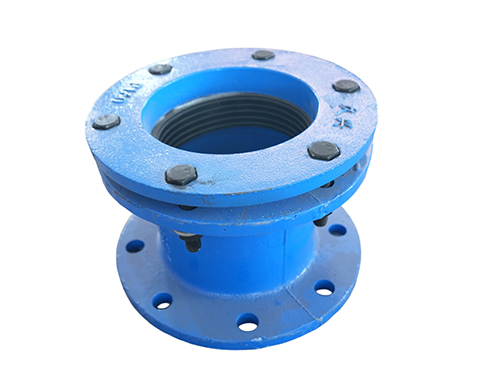
Flanged Expansion Joint
Product Overview
Flanged Expansion Joint is used in pipeline systems where movement caused by temperature changes, pressure variations, vibration, or external loads needs to be accommodated. Its flanged connection design allows the expansion joint to be installed between compatible pipe flanges, valves, pumps, and other pipeline equipment.
By providing controlled flexibility within its designed movement range, the expansion joint helps reduce mechanical stress transferred to connected pipes and equipment. It is suitable for both new pipeline installations and maintenance applications.
Structure and Features
A Flanged Expansion Joint generally consists of a joint body, flange ends, flexible or movement-compensating components, sealing elements, bolts, and nuts. The flange ends provide a bolted connection with the pipeline, while the flexible section accommodates specified axial, lateral, or angular movement depending on the joint design.
The sealing components form a connection between mating surfaces to help prevent fluid leakage. Different materials and structural configurations can be selected according to pipe size, pressure rating, operating temperature, transported medium, and installation environment.
Specifications
Flanged Expansion Joint specifications may include nominal pipe diameter, overall length, flange dimensions, bolt-hole arrangement, pressure rating, allowable movement, operating temperature, body material, and sealing material.
The flange dimensions can be configured to match the connection requirements of the existing pipeline system. Different lengths and movement ranges can also be selected according to pipeline layout and installation conditions.
Applications
Flanged Expansion Joint is commonly used in municipal water supply pipelines, wastewater systems, water treatment plants, industrial piping, heating and cooling systems, power plants, and other fluid transportation applications.
Typical applications include absorbing thermal expansion and contraction, accommodating pipeline displacement, reducing vibration transmission, and relieving mechanical stress around valves, pumps, and other connected equipment. Proper selection should consider pipe diameter, pressure, temperature, movement requirements, flange dimensions, and transported medium.