

PRODUCT
-
Pipe Repair Clamp
-
Elbow & Tee Repair Clamp
-
Saddle & Branch Repair Products
-
Fire Pipe Repair Clamp
-
Pipe Couplings & Expansion Joints
-
OEM Pipe Repair Solutions
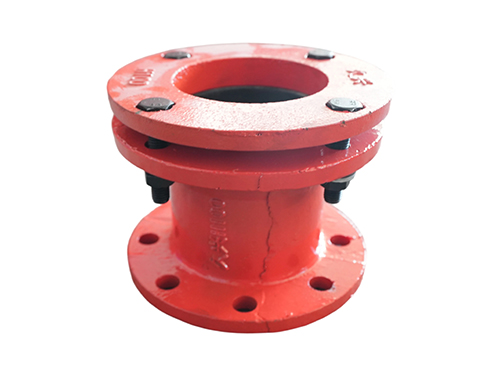
Pipeline Expansion Joint
Product Overview
Pipeline Expansion Joint is a flexible pipe connection component used to manage movement within pipeline systems. Temperature changes, pressure variations, equipment operation, and external loads can cause pipelines to expand, contract, or move, and an expansion joint provides controlled flexibility to accommodate these changes.
It can be installed between fixed sections of a pipeline to reduce the stress transferred to pipes, flanges, valves, pumps, and other connected equipment. The appropriate expansion joint design depends on the type and direction of movement expected within the piping system.
Structure and Features
A Pipeline Expansion Joint may consist of flexible elements, flanged or threaded connection ends, sealing components, and supporting or guiding structures depending on the design. Flexible construction allows controlled axial, lateral, or angular movement while maintaining the required connection and sealing performance.
Different designs can be selected according to pipe diameter, pressure rating, temperature range, movement requirements, and installation conditions. Material selection may also vary according to the transported medium, corrosion conditions, and operating environment.
Specifications
Pipeline Expansion Joint specifications may include nominal pipe diameter, connection type, overall length, pressure rating, allowable movement, operating temperature, body material, and sealing material.
Flanged configurations can be matched with corresponding pipe and equipment connections, while other connection designs may be used for specific piping applications. Custom dimensions and movement requirements can be considered according to the layout and operating conditions of the pipeline system.
Applications
Pipeline Expansion Joint is commonly used in water supply systems, wastewater pipelines, industrial piping, heating and cooling systems, power plants, chemical processing facilities, and other fluid transportation applications.
Typical applications include absorbing thermal pipe movement, reducing vibration transmission, accommodating pipeline displacement, and relieving mechanical stress around connected equipment. Proper selection should consider pipe size, operating pressure, temperature, movement direction and magnitude, connection type, and transported medium.