

BLOGS
OEM Pipe Repair Clamps: How Custom Fittings Get Made
2026-10-24 10:26:02
OEM Pipe Repair Clamps: How Custom Fittings Get Made
Most repair clamps sold worldwide never appear in their manufacturer's catalog. They are OEM products: cast to a distributor's drawing, stamped with the distributor's brand, packaged in the distributor's boxes and sold through the distributor's channels. For importers, utility suppliers and engineering firms, an OEM program is the difference between reselling a commodity and owning a product line. This article explains how the process runs from drawing to delivery, and where projects usually go sideways.
Who actually orders custom clamps
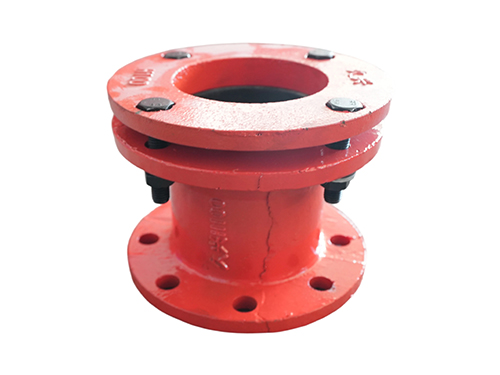
The customer list is broader than people expect. Distributors want their own brand on the shelf so that installers come back to them instead of shopping the part number online. Municipal contractors need clamps matching a project specification, a non-standard width, a particular gasket, a flange drilled to the local standard. Water utilities in some markets specify fittings they cannot buy off the shelf, and their suppliers have them made. And equipment manufacturers building pump sets and skid systems often need repair and coupling fittings as catalog parts for their own assemblies. What these buyers share is a need the standard range does not meet, and a factory that can respond to a drawing.
What the factory needs from you
An OEM program starts with a technical package, and its quality decides everything downstream. The ideal submission is a dimensioned drawing with tolerances, the required casting grade, gasket compound, bolt specification, pressure rating, coating system and marking requirements. In practice many first inquiries arrive as a sample fitting and a photograph, which a capable factory can also work from: the sample gets measured and a drawing produced for approval. Expect the manufacturer to come back with questions, because those questions are the cheapest engineering review you will ever get. The exchange to worry about is the one where nobody asks anything.
Tooling, samples and the approval loop
Once the drawing is agreed, the factory cuts tooling, patterns for the castings and molds for the gaskets. This is the main upfront cost of a custom program, and tooling ownership is worth negotiating explicitly, since it determines what happens if the relationship ever ends. Tooling in hand, the factory casts and machines sample fittings, and the samples go through the same pressure and dimensional testing as production. Approve the samples in writing, ideally after bolting one onto real pipe and testing it yourself, and the design is frozen. Changes after this point are possible but they cost tooling time, so the approval stage deserves genuine attention rather than a rushed sign-off.
Certification and traceability
Custom fittings for municipal or industrial projects usually live or die on paperwork. The typical package includes material certificates for the ductile iron, compound data for the elastomer, coating specifications, hydrostatic test records and dimensional reports, all referenced to batch numbers that appear on the product and the packaging. A manufacturer set up for export will produce this package routinely, because their existing utility customers demand it. Ask early whether your documentation requirements can be met, and be specific: a list of the documents you want with each shipment means the factory can answer honestly.
Branding, packaging and the details
Private label work covers the parts the installer sees first. Casting marks can carry your brand and part number, molded into the body so they survive the coating process. Cartons print to your artwork. Some distributors add serialized labels for traceability, which utilities increasingly require on everything buried in their networks. None of this is technically demanding, but it is administratively demanding, and the factories that handle it well are the ones with a dedicated export documentation desk rather than a salesperson doing it in the margins of the day.
Lead times, minimums and money
Realistic numbers help everyone plan. Tooling for a moderate custom clamp typically takes weeks, sample production a few more, and first production runs after approval. Minimum order quantities are usually driven by the economics of a casting batch and the gasket press run, so expect the factory to quote one. Payment on OEM programs commonly splits tooling cost from product cost, with the tooling paid once and amortized into the product over reorder cycles. The buyers who get the best long-term pricing are the ones who consolidate multiple sizes into one program, because a factory running a family of castings for one customer schedules it efficiently.
Where programs go wrong
The failure modes repeat. Specifications agreed verbally and remembered differently. Samples approved without testing. Documentation promised at the end because nobody raised it at the start. Tooling ownership never discussed. Every one of these is avoidable with a written technical agreement before tooling starts, and a manufacturer who resists putting things in writing is telling you something. A factory that pushes for clarity early, including awkward questions about your volumes and end markets, is behaving like a partner, which is what a multi-year program needs.
References
International Organization for Standardization, ISO 2531: Ductile iron pipes, fittings, accessories and their joints for water pipeline applications, Geneva, Switzerland.
ASTM International, ASTM A536: Standard Specification for Ductile Iron Castings, West Conshohocken, Pennsylvania.
International Organization for Standardization, ISO 4633: Rubber seals, joint rings for water supply, drainage and sewerage pipelines, Geneva, Switzerland.
European Committee for Standardization, EN 1092-1: Flanges and their joints, circular flanges for pipes, valves, fittings and accessories, PN designated, Brussels, Belgium.