

BLOGS
Pipe Expansion Joints and Dismantling Joints Explained
2026-10-26 10:09:04
Pipe Expansion Joints and Dismantling Joints Explained
Pipelines move. Heat, pressure and settlement all push pipe out of position, and something in the line has to absorb that movement without cracking a joint or shearing a flange. Two fittings share this duty in ductile iron networks: the expansion joint, which takes axial movement, and the dismantling joint, which gives installers the length adjustment that rigid flanged pipe refuses to provide. They look like cousins, get stocked together, and do entirely different jobs.
Why lines need to move
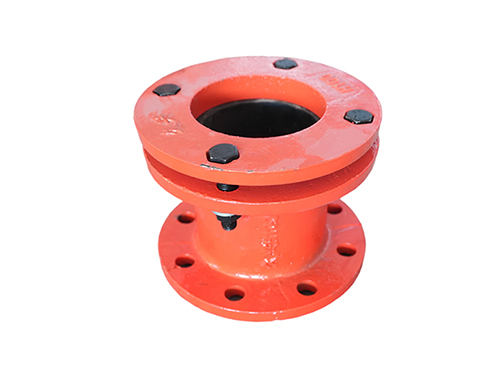
A buried water main changes temperature with the seasons and shifts as soil wets and dries. An exposed plant line swings wider, and steel or ductile iron grows measurably with every degree. Pipe does not shrug off that growth. It converts it into thrust at anchors, bends and valves, and something eventually gives. Designers deal with the movement in two ways: bends and offsets that flex a little, and fittings engineered to move on purpose. The expansion joint is the engineered option, telescoping along the pipe axis so the pipe neither pushes nor pulls on the equipment at either end.
How an expansion joint is built
The classic ductile iron version is a telescoping assembly: a sliding tube runs inside a body, with packing or an elastomer seal between them, and a limited travel range defined by the design. Pipe expansion joints for waterworks usually arrive flanged to EN 1092-1 drilling, in pressure classes matching the network, PN10 and PN16 being common. Unlike rubber bellows, the metal telescoping type has no fatigue life problem; it simply slides, and the seal does the work. That makes it a long-life component, provided the seal is maintained and the travel is not consumed by poor installation, which is where most of the trouble starts.
Installing expansion joints without wasting their travel
An expansion joint arrives set at a nominal length, and that setting is part of the design. The installing crew is supposed to adjust it: extend or compress it to suit the pipe temperature at installation time, so the remaining travel covers movement in both directions for the life of the line. Set it carelessly, and the fitting runs out of slide in one direction in the first summer and either locks up or pulls apart. The manufacturer's data sheet gives the adjustment table, and the five minutes it takes to read is the difference between decades of service and a recurring maintenance entry.
What a dismantling joint is for
The dismantling joint solves a different problem. Flanged pipe is unforgiving about length: two flanges have to land exactly face to face, and a bolt hole that is off by a centimeter means the crew is out there with come-alongs and bad language. A dismantling joint is a flanged fitting with an adjustable length and a self-restraining design. The crew bolts one end, telescopes the fitting to the exact gap, and locks it. Its second purpose is in the name: valves, meters and pumps occasionally need to come out for service, and a dismantling joint beside them lets each be lifted clear without cutting pipe. Pump sets and meter chambers almost always include one for this reason.
Choosing between them, and using both
The selection rule is short. Thermal or settlement movement along the run: expansion joint. Length adjustment and maintainable equipment removal: dismantling joint. Neither does the other's job well. A dismantling joint has almost no designed travel, and an expansion joint is not a restraint. In practice, plant rooms use both: an expansion joint at the pump discharge for vibration and thermal growth, and a dismantling joint beside the pump so it can be pulled for overhaul. Suppliers who make the full range can match pressure class and flange drilling across both fittings, keeping documentation and coating consistent through the order.
Points worth checking before ordering
Ask the manufacturer for the actual travel range on the expansion joint, not just the nominal size, since designs differ and the range needs to cover your calculated movement with margin. Confirm the flange drilling standard against the adjacent pipe or equipment, because mixing ISO and ANSI patterns is a classic commissioning delay. On dismantling joints, check how the fitting locks at its set length, and whether tie rods are included for end loads. Coating and gasket compound follow the same logic as repair clamps: epoxy over zinc primer for buried work, EPDM for water, and full material documentation if the project carries any inspection regime at all.
Maintenance reality
Both fittings are low-maintenance by nature. Expansion joints deserve a look during shutdowns for seal weep and travel position, particularly after any line modification. Dismantling joints, once locked, are usually forgotten until the day the pump behind them needs lifting, which is the day everyone appreciates the fitting that was specified years earlier by someone thinking ahead.
References
European Committee for Standardization, EN 1092-1: Flanges and their joints, circular flanges for pipes, valves, fittings and accessories, PN designated, Brussels, Belgium.
International Organization for Standardization, ISO 2531: Ductile iron pipes, fittings, accessories and their joints for water pipeline applications, Geneva, Switzerland.
European Committee for Standardization, EN 545: Ductile iron pipes, fittings, accessories and joints for water pipelines, requirements and test methods, Brussels, Belgium.
American Water Works Association, Manual of Water Supply Practices M41: Ductile-Iron Pipe and Fittings, Denver, Colorado.