

BLOGS
Pipe Couplings and Expansion Joints for Stable Connections
2026-09-27 08:28:10
Pipe Couplings and Expansion Joints for Stable Connections
A pipeline is never truly still. It heats, cools, settles, and shifts, and where two sections meet those movements become forces. Pipe couplings join the sections; expansion joints absorb the movement so it does not crack the pipe or tear the joint. Together they are the quiet hardware that lets a long line survive the seasons. Getting the two confused, or fitting the wrong one, is a common route to a joint that weeps every winter.
Rigid Versus Flexible Couplings
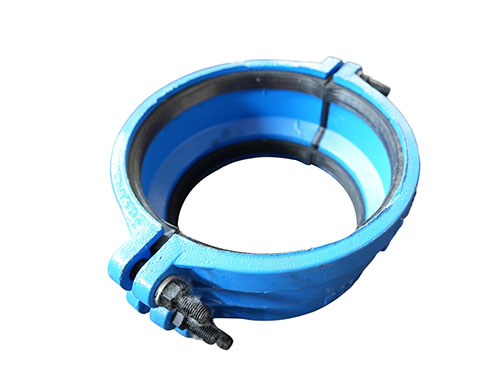
A rigid coupling locks two pipe ends into a fixed alignment, good where the route is straight and the ground is stable. A flexible coupling allows a degree of angular and axial movement, which suits settling soil or lines that will be nudged during installation. The choice is not about which is "better" but about what the pipe will do. A supplier that asks about soil and layout before quoting is doing the job; one that ships the same coupling for everything is not.
Flanged Couplings and Adapters
The flanged coupling joins two flanged ends, or a flange to a plain pipe via an adapter, and is the workhorse where equipment meets the line: pumps, valves, tanks. A flanged pipe adapter bridges a flanged valve to a plain-ended pipe without welding. Because the bolt circle must match, the flange drillings matter, and a manufacturer that holds tight tolerances saves the field crew from the misery of bolts that will not line up. We machine our flanges to standard drillings so the parts actually fit the plant's existing inventory.
Dismantling Joints
A dismantling joint is a flanged coupling with adjustable length, letting you set the exact gap needed to drop a valve or pump into a fixed run. Without it, you are praying the pipe was cut to the millimeter. Once the equipment is in, the joint is tightened to lock the length. On retrofits especially, this adjustability turns an impossible fit into a routine one, and it is the part experienced fitters ask for by name when the drawing leaves no slack.
What Expansion Joints Absorb
Pipes grow when hot and shrink when cold; a long run can move by tens of millimeters across a season. An expansion joint, often a rubber-bellows or a ductile iron unit with a flexible element, takes that movement so the anchors and the pipe do not. Ignore it and the thrust loads walk the line, loosening supports and opening joints. Sizing the joint to the expected movement, not just the bore, is the step that prevents a premature failure.
Material and Pressure Matching
Couplings and joints should match the pipe in both material and pressure class. Mixing a low-rated coupling onto a high-pressure main is a deferred accident. Ductile iron bodies paired with the right gasket give a robust, serviceable connection for water, fire, and many industrial lines. A factory that casts and tests to a stated class, and supplies the certificate, removes the guesswork that leads to mismatched orders.
Installation Discipline Still Applies
Even the best coupling leaks if the pipe ends are not square, clean, and properly supported. Bolts must be torqued evenly, and on expansion joints the temporary shipping restraints are removed only after the line is aligned. These are small steps with large consequences, and they are the reason a connection done once, correctly, outlasts three done in a hurry. As a supplier we include the torque and restraint notes with every shipment so the crew is not decoding the fitting on site.
Anchoring So the Joint Does the Work
An expansion joint only earns its keep if the line is anchored correctly. Without fixed points to push against, the joint travels to its limit and then the pipe takes the load it was meant to avoid. Good layout sets anchors at the right spacing and lets the joint breathe between them. A supplier who can advise on anchor placement, not just sell the part, saves a retrofit that nobody budgeted for when the line started moving.
Field Checks That Prevent Callbacks
Before pressure, confirm the bolts are even, the flange faces are clean, and any expansion joint still has its shipping restraints in place. Removing those restraints too early lets the joint extend under its own spring and overstress the connection. A two-minute walk-around catches most callback causes. We print these checks on the shipment so the crew has the list in hand rather than relying on memory at the end of a long day.
Matching New to Existing Inventory
Plants rarely start from zero; they add to what is already bolted down. A coupling or flange that matches the existing drillings and pressure class drops in without rework, while a near-miss forces adapters and delays. When ordering, send the flange standard and the bore you are joining to, and a manufacturer can confirm the match before the truck leaves. That confirmation is cheaper than a return from a remote site with a crane already on site.
References
American Water Works Association (AWWA). AWWA C219, Steel Pipe Flanges for Waterworks Service.
ASTM International. ASTM A536, Standard Specification for Ductile Iron Castings.
ISO 2531, Ductile iron pipes, fittings and accessories for pressurized water pipelines.
Wikipedia contributors. "Expansion joint." Wikipedia, The Free Encyclopedia.