

BLOGS
Understanding the Pipe Repair Clamp: A Practical Field Guide
2026-09-23 03:19:51
Understanding the Pipe Repair Clamp: A Practical Field Guide
Anyone who has stood ankle-deep in water beside a burst main knows the panic of a leaking line. Shutting the system down for days to cut and reweld a section is rarely an option. That is where the pipe repair clamp earns its keep. In plain terms, it is a split, wrap-around fitting that hugs the damaged section from the outside and presses a sealing gasket against the leak. No torch, no full shutdown, no removing the pipe. For municipal crews, plant engineers, and fire-protection contractors, it has become the go-to tool for buying time and restoring service fast.
What the Clamp Actually Is
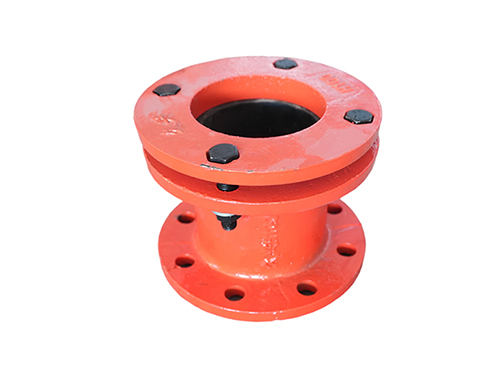
A typical repair clamp is built from two half-shells, usually cast in ductile iron, that bolt together around the pipe. Inside sits an elastomer gasket, often EPDM or NBR, sized slightly wider than the damaged zone. When the bolts draw the shells tight, the gasket compresses and forms a watertight barrier over the crack, pinhole, or corroded pit. The shell takes the mechanical load; the gasket does the sealing. This two-part design is why a clamp can bridge a gap or offset without relying on the pipe wall itself being sound.
Why Ductile Iron Became the Standard
Early clamps were sometimes stamped from mild steel, but steel bends and rusts. Ductile iron, sometimes called nodular iron, gives a rigid body that resists deformation under pressure while shrugging off soil loads and traffic vibration. A reputable factory will cast to a recognized grade and pressure-test every batch. The result is a fitting that can sit buried for decades without the shell itself becoming the next failure point. For buyers, asking a supplier about casting grade and hydrostatic test pressure is a far better question than simply chasing the lowest price.
Where Crews Install Them
The short answer: almost anywhere a pressurized line runs. Water utilities use clamps on distribution mains and service connections. Fire systems rely on them where a sprinkler feed has corroded. Gas and industrial plants fit them on low-pressure process lines. Because the clamp wraps the outside, it works on buried, submerged, or overhead pipe alike, provided you can get a wrench on the bolts. Many plants also keep a few sizes in stock as part of an emergency kit, since the alternative is a far messier excavation.
Repair Clamp vs. Repair Sleeve
These two names get mixed up constantly. A repair clamp is usually a shorter, bolt-on unit meant for a localized defect. A repair sleeve is a longer section that slides over the pipe and is sealed at both ends, better suited to extensive corrosion or a long weak stretch. Knowing which you need prevents ordering the wrong part and waiting another week for the right one. A manufacturer that stocks both can usually advise once you send a photo and the pipe diameter.
Pressure Rating and Sizing
Clamps are rated by the working pressure they can safely contain, commonly from a few bar up to sixteen bar or more for water duty. Sizing is not the nominal pipe label alone; the actual outside diameter matters, because cast-iron, steel, and PVC pipes of the same nominal size can differ in OD. Good suppliers publish a measurement chart and will confirm the fit before shipping. Getting this wrong means a clamp that never seals, so a five-minute measurement saves a return shipment.
How Long Will It Last
A clamp is often sold as a permanent repair, and on low-to-moderate duty it can indeed last the remaining life of the line. On lines with heavy vibration, constant thermal movement, or aggressive chemicals, it is better treated as a long-term fix backed by a scheduled inspection. The gasket is the wear item; a clamp with a cracked or hardened gasket should be re-gasketed rather than trusted. Most factories supply replacement gaskets separately, which keeps the steel and iron investment in service.
Buying From a Reliable Source
Because the product looks simple, the market is crowded with cheap copies. The difference shows up underground, where nobody is watching. A proper supplier will give you the material certificate, the pressure test record, and a clear bolt torque spec. As a manufacturer with integrated casting and machining, we treat the clamp as a structural part, not a clamp-on toy, and that mindset is what separates a repair that holds from one that leaks again at 3 a.m.
Signs a Clamp Is the Right Call
You do not need a clamp for every weep. It suits a defined defect on a sound pipe: a crack, a pinhole, a corroded pit, a failed joint seal. If the wall is broadly thinned or the line moves constantly, a sleeve or an expansion joint is the better answer. Reading the pipe honestly before you order is what keeps a repair from becoming a repeat visit, and it is a habit worth more than any single product choice when the ground is cold and the water is rising.
References
ASTM International. ASTM A536, Standard Specification for Ductile Iron Castings.
American Water Works Association (AWWA). AWWA C111/A21.11, Rubber-Gasket Joints for Ductile-Iron Pressure Pipe.
ISO 2531, Ductile iron pipes, fittings and accessories for pressurized water pipelines.
Wikipedia contributors. "Ductile iron." Wikipedia, The Free Encyclopedia.
Wikipedia contributors. "Pipe (fluid conveyance)." Wikipedia, The Free Encyclopedia.