

BLOGS
Stopping Municipal Water Pipeline Leaks with Repair Clamps
2026-09-30 03:33:47
Stopping Municipal Water Pipeline Leaks with Repair Clamps
Every utility lives with a quiet tax called non-revenue water: the volume produced, paid for in energy and treatment, that never reaches a meter. A chunk of it escapes through leaks old and new. Crews cannot dig up a whole network at once, so the practical weapon is the pipe repair clamp, fitted the day a leak is confirmed. For a water department, the clamp is less a product than a workflow that keeps the system delivering between capital projects.
Where the Losses Actually Happen
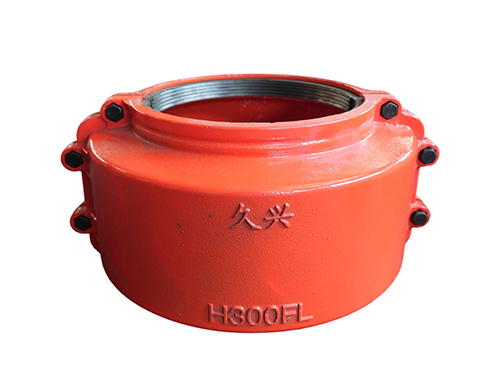
Leaks rarely pick a convenient spot. They open at brittle joints on century-old cast-iron mains, at saddle taps where a service line was added decades back, and at thrust blocks where soil has washed out. Each calls for a slightly different clamp profile, but the principle is constant: wrap the defect, compress a gasket, restore pressure. A utility that stocks the common diameters and a couple of saddle styles can answer most calls from the truck, without a return trip for parts.
Mains Versus Service Lines
A trunk main carries pressure and volume, so the clamp there must hold the full system rating and resist the surge that follows a valve slam. Service lines are lower pressure but harder to reach, often under a sidewalk or driveway, so a compact clamp that a single tech can fit in a tight pit earns its place. Our factory builds both ranges, because a one-size answer forces crews to over-specify or under-protect, and both mistakes cost money downstream.
Pressure and Surge Realities
Water does not forgive a violent valve move. A clamp rated at the steady working pressure can still weep if a surge spike arrives before the air is bled. Good field practice bleeds the line slowly and reopens valves gradually, and a well-made clamp carries a test margin above the working number to absorb the spike. When a supplier quotes a clamp, ask for the test pressure, not just the working figure; the gap between them is your safety buffer.
Cutting Non-Revenue Water
Clamping a confirmed leak is the fastest line on the loss-reduction ledger. A one-meter-per-second seep on a small main can waste thousands of liters a day, and a clamp fitted before lunch pays for itself before the paperwork is filed. Utilities that pair clamp programs with acoustic logging find the leaks earlier, when they are still pinholes, and a small clamp beats an emergency excavation every time. The economics are dull and dependable: fix it small, fix it once.
Working in the Street
Field conditions are messy. The pipe may be caked in clay, the pit may be half-flooded, and traffic is waiting. A clamp that snaps together fast and seats without precise surface prep shortens the lane closure. That is why our designs favor wide gaskets and forgiving bolt patterns; a crew under a deadline should not need a machinist's tolerance to get a seal. Speed on site is a feature, not a compromise on quality.
Records That Prevent Repeat Calls
A clamp fitted and forgotten is a future mystery. The utility that logs each repair with location, diameter, pressure, and date builds a map of its own weak points. Patterns emerge: a certain street keeps leaking because of soil chemistry, a certain diameter fails at joints. That intelligence drives capital renewal where it matters, and lets a supplier pre-stage the right stock before next season's calls. As a manufacturer we can even tag batches so a repeat order is matched to the original fit.
Seasonal Patterns Utilities Should Expect
Leak calls are not random across the year. Freeze-thaw cycles open joints in late winter, and summer demand surges stress mains at their weakest points. A utility that stocks clamps ahead of these peaks answers faster and loses less water during the worst weeks. Mapping past repairs against the calendar turns a reactive crew into a scheduled one, and a supplier who sees the order pattern can pre-stage the sizes that always run short when the weather turns.
Working With Contractors and Crews
The clamp is only half the solution; the other half is a crew that fits it right under pressure, literally and figuratively. Utilities that brief contractors on surface prep, bolt sequence, and the pressure-test step get repairs that hold, not ones that weep by the next quarter. Providing the torque spec and a photo of the defect in the work order removes the guesswork. As a manufacturer we bundle those notes so the field is not interpreting the fitting from scratch on a dark night.
Closing the Loop With Data
Every clamped leak is a data point. Fed into a simple log, those points show which diameters, streets, and soil types fail most, guiding where renewal money goes first. The repair that felt like a small job becomes part of a larger asset strategy. A supplier who can match batch records to your log makes that analysis cleaner, because the part history travels with the fitting instead of staying at the foundry.
References
American Water Works Association (AWWA). AWWA Manual M28, Rehabilitation of Water Mains.
International Water Association (IWA). Non-Revenue Water terminology and management.
U.S. Environmental Protection Agency. Water System Risk Assessment guidance.
Wikipedia contributors. "Water supply network." Wikipedia, The Free Encyclopedia.