

BLOGS
Tapping Saddle Clamps and Branch Connections Made Simple
2026-09-29 01:04:00
Tapping Saddle Clamps and Branch Connections Made Simple
Adding a service line to a live main used to mean draining the street and hoping the weather held. The tapping saddle clamp changed that. It bolts onto the outside of a pressurized pipe, gives you a sealed boss to drill through, and lets a crew branch off without taking the system down. For water and fire services, it is the ordinary way new connections get made, and the difference between a clean tap and a flood is mostly in the details below.
What a Saddle Actually Does
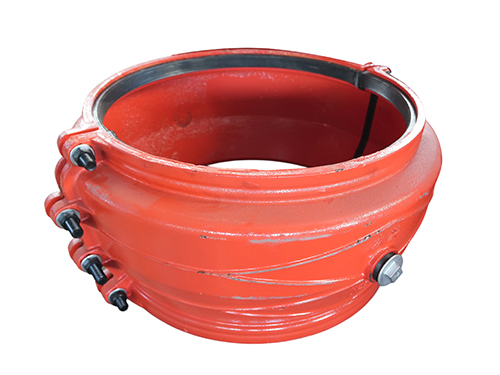
A saddle is a contoured clamp, often in ductile iron, shaped to sit on the curved pipe surface and held by straps or bolts. Molded into it is a boss, or outlet, where the new branch threads or flanges on. A gasket between saddle and pipe keeps the seal as you drill. The clever part is that the drilling happens through the sealed boss, so the moment the bit clears the pipe wall, the branch is already connected and contained. No open hole, no geyser.
Full-Wrap Versus Strap Saddles
Two families dominate. The strap saddle uses metal bands around the pipe and suits lighter duty and smaller diameters where the load is modest. The full-wrap saddle encircles the pipe with a rigid cast body and is the choice for higher pressure or larger mains, because it spreads the clamping force and resists the torque of drilling. A supplier should steer you to the full-wrap type the moment the pressure or diameter climbs, not wait for a failure to make the point.
Drilling Under Pressure
The tap is made with a drilling machine or a saddle-mounted cutter that maintains the seal throughout. You set the saddle, torque it, then cut the hole through the boss while the line stays live. The cut coupon is usually captured so it cannot travel into the main. Working pressure is held the whole time, which is why the gasket and the boss threads must be sound. A factory that pressure-tests the saddle body before shipment is removing the one variable you cannot watch in the field.
Gasket and Surface Checks
As with any external repair, the pipe where the saddle sits must be clean and reasonably round. Heavy corrosion or an out-of-round pipe leaves the gasket with gaps it cannot close. Confirm the saddle covers sound pipe on both sides of the tap, and that the gasket is seated flat with no folds. A saddle fitted over a void or a previous patch is a saddle waiting to weep, and a weep on a live tap is a poor afternoon.
Sizing the Outlet
The branch size is set by the service demand, not by what looks handy. Too small and pressure drops at the far end of the new line; too large and you have over-cut the main and weakened it. Match the saddle boss to the planned service and confirm the main wall is thick enough to take the cut. Our factory marks the minimum main thickness on the data sheet so the installer is not guessing with a caliper in a muddy pit.
Keeping the Connection Honest
Once drilled, the tap should be logged: location, main size, branch size, pressure, date. A saddle is a permanent addition to the network, and the next crew to work that main needs to know a branch is there. As a manufacturer we build saddles to the same casting and test standard as our repair clamps, because a branch connection that fails takes out two lines at once. The part looks simple; the consequences of a cheap one are not.
Safety Margin on the Tap
Drilling a live main is controlled risk, and the saddle is what keeps it controlled. The boss must be rated for the line pressure with margin, and the drilling machine must maintain the seal through the cut. Crews should confirm the saddle matches the main class before the first turn of the bit; a mismatch there is not a field fix, it is a flood. A supplier who states the rating plainly removes the one assumption that causes the most trouble on a tap.
Records That Survive the Years
A tap is a permanent branch, and the next crew to open that main needs to know it is there. Log the location, main and branch sizes, pressure, and date the moment the cut is finished. A saddle with a traceable batch number lets that future crew confirm the part, not wonder about it. As a manufacturer we mark and record every saddle we ship, because a branch connection that fails takes out two lines and the trust in both at once.
References
American Water Works Association (AWWA). AWWA C800, Underground Service Line Valves and Fittings.
ASTM International. ASTM A536, Standard Specification for Ductile Iron Castings.
ISO 2531, Ductile iron pipes, fittings and accessories for pressurized water pipelines.
Wikipedia contributors. "Tapping (oil and gas)." Wikipedia, The Free Encyclopedia.