

PRODUCT
-
Pipe Repair Clamp
-
Elbow & Tee Repair Clamp
-
Saddle & Branch Repair Products
-
Fire Pipe Repair Clamp
-
Pipe Couplings & Expansion Joints
-
OEM Pipe Repair Solutions
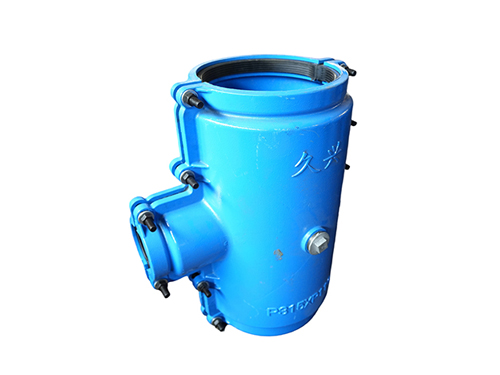
Tee Repair Clamp
Product Overview
A Tee Repair Clamp is used for repairing localized damage at pipeline tee connections, including leaks, cracks, corrosion, and damaged connection areas. Its multi-directional configuration is designed to accommodate the main pipe and branch outlet of a tee fitting.
The repair assembly generally consists of a metal clamp body, sealing gasket, bolts, and nuts. It is positioned around the affected tee section and tightened to apply pressure to the sealing area.
Structure and Sealing
The clamp body is designed around the geometry of the tee connection, with a main section covering the pipeline and a branch section accommodating the outlet. This structure allows the repair fitting to cover irregular connection areas that cannot be effectively repaired with a straight pipe clamp.
A shaped sealing gasket is installed between the clamp and pipe surface. Tightening the fastening bolts compresses the gasket against the damaged section and creates a mechanical sealing interface.
Specifications
Product Type: Tee repair clamp
Main Pipe Diameter: Available for different pipe sizes
Branch Outlet Diameter: Configurable according to tee dimensions
Clamp Body: Metal construction
Sealing Element: Rubber or elastomer gasket
Fastening System: Bolts and nuts
Connection Type: Mechanical pipe repair connection
Surface Treatment: Configurable according to service environment
Configuration: Selected according to pipe dimensions and repair requirements
Applications
Tee Repair Clamp can be used for:
Tee fitting leak repair
Branch connection maintenance
Pipeline crack sealing
Localized corrosion repair
Damaged tee reinforcement
Water supply pipeline systems
Municipal distribution pipelines
Industrial and utility piping systems
When selecting a Tee Repair Clamp, the main pipe diameter, branch outlet diameter, pipe material, operating pressure, temperature, tee geometry, and damaged area should be evaluated to determine the appropriate clamp structure and gasket configuration.