

PRODUCT
-
Pipe Repair Clamp
-
Elbow & Tee Repair Clamp
-
Saddle & Branch Repair Products
-
Fire Pipe Repair Clamp
-
Pipe Couplings & Expansion Joints
-
OEM Pipe Repair Solutions
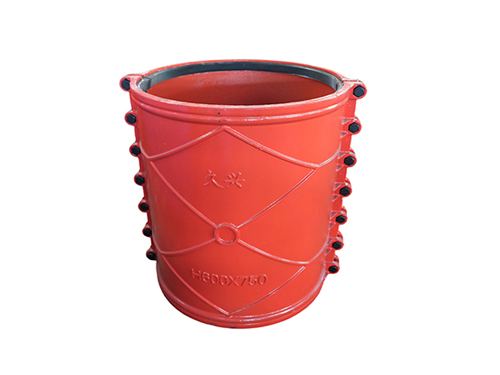
Pipe Repair Coupling
Product Overview
A Pipe Repair Coupling is used to reconnect pipeline sections where a pipe has been cut, damaged, or requires localized replacement. It provides a mechanical connection between two pipe ends and can accommodate certain installation or maintenance conditions where conventional joining methods are not practical.
The coupling generally consists of a metal sleeve or coupling body, sealing gaskets, bolts, and nuts. The components are assembled around the pipe ends, with the gaskets compressed to form a sealed connection.
Structure and Connection
The coupling body surrounds the ends of the two pipes being joined. Sealing gaskets are positioned inside the coupling to create sealing interfaces against the external surfaces of the pipes.
When the fastening bolts are tightened, the coupling body compresses the gaskets and secures the pipe ends within the connection assembly. Depending on the design, the coupling can accommodate variations in pipe dimensions and provide a mechanical connection without welding.
Specifications
Product Type: Pipe repair coupling
Application: Pipe connection and repair
Pipe Diameter: Available for different pipe sizes
Coupling Body: Metal construction
Sealing Element: Rubber or elastomer gasket
Fastening System: Bolts and nuts
Connection Type: Mechanical pipe connection
Pipe Compatibility: Selected according to pipe material and outside diameter
Surface Treatment: Configurable according to service environment
Configuration: Available according to pipe size and connection requirements
Applications
Pipe Repair Coupling can be used for:
Damaged pipe section replacement
Pipeline reconnection
Pipe end joining
Localized pipeline maintenance
Water supply pipelines
Municipal distribution systems
Industrial piping systems
Utility and infrastructure pipelines
When selecting a Pipe Repair Coupling, the pipe outside diameter, pipe material, pipe end condition, required connection length, operating pressure, temperature, and installation environment should be considered to determine the appropriate coupling dimensions and sealing configuration.